Hardwood provides excellent energy return and ball response. Moisture control and periodic refinishing maintain performance.
Sprung substructures can enhance shock absorption.

Indoor Surface
Traditional maple-based hardwood floors for elite indoor basketball and multipurpose venues.
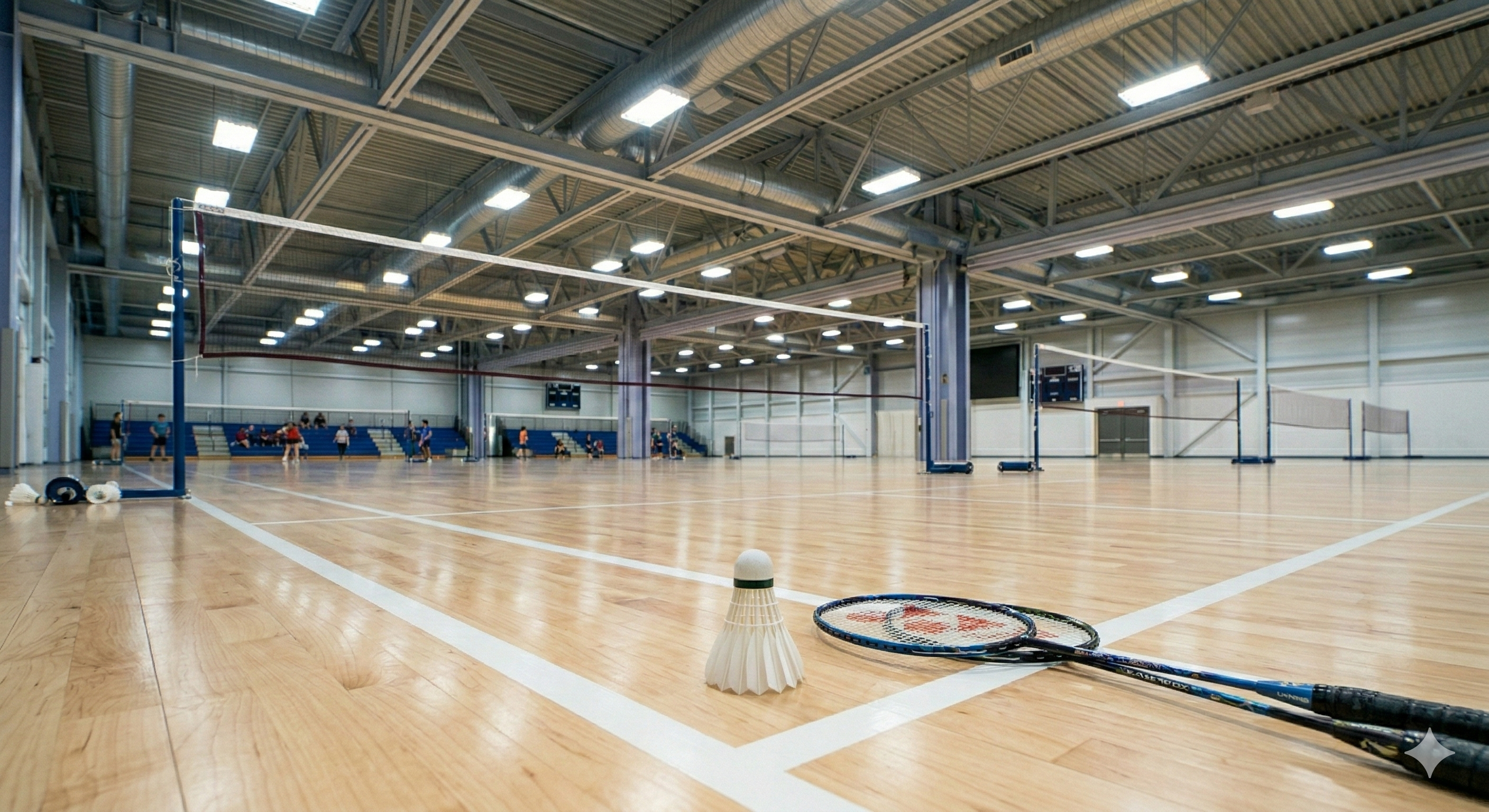
Hardwood maple flooring is the gold standard for indoor sports halls — it is the official surface specification for NBA basketball, Olympic volleyball, international handball, and competitive squash. The natural hardness and density of maple wood provides the ideal combination of ball bounce, player traction, and energy return.
A sports hardwood floor system is not just planks of wood — it is an engineered system with a resilient underlayer (springs, rubber pads, or foam) that provides shock absorption, a structural plywood intermediate layer, and the hardwood surface layer. The springs or pads decouple the hardwood from the concrete below, giving the floor its characteristic 'give'.
Solid maple floors are expensive and demand specific climate control (humidity and temperature) to prevent warping — making them challenging in India's climate without HVAC. Engineered hardwood and European beech alternatives are available that perform similarly with better dimensional stability in humid conditions.
| Parameter | Detail |
|---|---|
| Species | Hard maple (Acer saccharum) — MFMA standard |
| System | Solid hardwood on spring/pad sub-system (floating or fixed) |
| Plank Width | 57mm (standard MFMA basketball specification) |
| Thickness | 20–22mm hardwood face; total system 50–100mm |
| Lifespan | 25–50 years (can be resanded multiple times) |
| India Cost Range | ₹4,000 – 9,000/sqm installed (imported maple) |
| Maintenance | Daily damp mopping; resanding every 5–10 years; recoating every 2–3 years |
| Humidity Requirement | 45–65% RH — HVAC essential for warping prevention |
Hardwood provides excellent energy return and ball response. Moisture control and periodic refinishing maintain performance.
Sprung substructures can enhance shock absorption.
Hardwood maple requires controlled humidity (45–65% RH) and temperature to prevent expansion, contraction, and warping. In India, this means an air-conditioned indoor hall is mandatory. Without HVAC, wood floors in coastal, high-humidity, or extreme-temperature locations will suffer warping and gap formation. For facilities with proper climate control, maple performs excellently.
Solid maple is 22mm thick planks of pure maple hardwood. Engineered hardwood uses a thin maple veneer (3–5mm) bonded over plywood core layers — this is much more dimensionally stable in variable humidity. Engineered hardwood is recommended for most Indian installations as it tolerates humidity variation much better than solid maple, at a lower cost.
A maple floor needs resanding (machine sanding of the entire surface to remove scratches and level the surface) every 5–10 years depending on use intensity. Resanding restores the surface to near-new condition. The finish coat (polyurethane lacquer) needs reapplication every 2–3 years. Daily maintenance involves damp mopping and dust-mopping.
Yes — multi-sport line markings in different colours are painted on the maple floor. A typical FIBA/FIVB hall will have basketball (orange/yellow lines), volleyball (blue/red lines), handball (black lines), and sometimes badminton (white or red lines) all on one floor. Only one sport is played at a time and the full line set is always visible.
A sprung floor system has shock-absorbing elements (springs, rubber pads, or resilient foam) between the hardwood surface and the concrete slab. This 'spring' reduces the impact forces on players' legs and feet. FIBA requires that all Levels 1 and 2 basketball floors have a minimum shock absorption of 25% per EN 14808. NBA courts use elaborate spring systems under the maple.
Tell us about your project and we will recommend the right surface and standards.
Request a call