
Outdoor Surface

Artificial Turf

Synthetic turf systems engineered for consistent ball roll, shock absorption, and drainage in multi-sport and football applications.

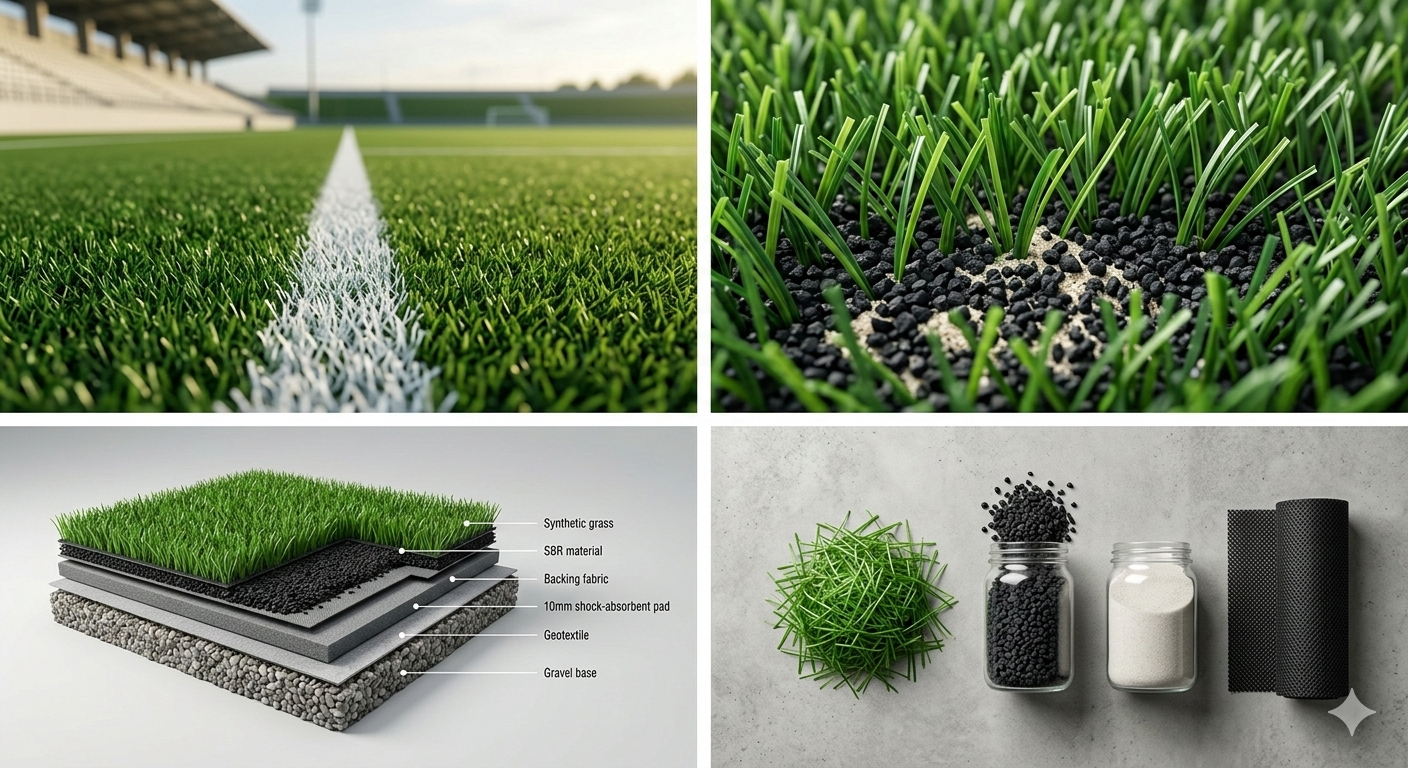
Artificial turf football field and turf layer components

What Is Artificial Turf (Synthetic Grass)?

Artificial turf — commonly called synthetic grass — is a surface made of synthetic fibres designed to look and perform like natural grass. It is used worldwide for football, hockey, rugby, cricket, tennis, and landscaping. Modern artificial turf fibres are made from polyethylene or polypropylene and are designed to handle heavy use, extreme weather, and intensive training loads.

Unlike natural grass, artificial turf requires no watering, mowing, or seasonal resting. It can be used year-round regardless of rainfall, making it particularly well-suited to India's monsoon-affected climate. Artificial turf systems include a backing layer, a shock-absorbing pad (underlayer), and infill material (rubber granules, sand, or organic material).

The performance of an artificial turf surface depends on three factors: fibre specification (pile height, density, material), shock pad quality, and infill type. FIFA, FIH, World Rugby, and ITF all have specific turf certification programmes that verify performance for their respective sports.

Key Specifications & India Cost

ParameterDetail
Surface TypeSynthetic polyethylene/polypropylene fibres on woven backing
Typical Pile Height12–20mm (futsal/hockey), 40–60mm (football), 7–13mm (padel/tennis)
Infill MaterialSBR rubber, TPE rubber, sand, cork, or hybrid blends
Lifespan8–12 years (FIFA/FIH quality) with proper maintenance
India Cost Range₹350 – 1,200/sqm depending on specification and infill
Certifications AvailableFIFA Quality Pro, FIH Global Preferred, World Rugby Preferred
Maintenance RequiredBrushing (monthly), infill top-up (annual), decompaction (biannual)
Drainage15–30mm/hour when properly installed with draining base

Pros & Cons

Advantages

  • Playable year-round — unaffected by monsoon, drought, or extreme heat
  • No watering, mowing, or fertilisation required
  • Consistent playing surface — no bare patches or mud
  • Lower long-term maintenance cost than natural grass
  • FIFA/FIH certified options for official competition use
  • Available in multiple sports specifications (height, density, fibre)

Considerations

  • Higher upfront installation cost than natural grass
  • Surface heats up significantly in direct sunlight (can reach 60–70°C)
  • Rubber infill requires periodic top-up as it compacts
  • Full replacement needed after 10–12 years (cannot be repaired in patches)
  • Not recommended for sports where natural grass behaviour is critical (e.g. Test cricket)

Recommended Applications

Football and futsal pitches
Hockey (with certified systems)
Multi-sport community fields

Surfaces Used

Synthetic turf systems

Certifications & Standards

FIFA
FIH

Design & Performance Notes

Modern turf systems are built in layers to manage shock absorption and drainage. The correct infill and fiber height are selected to match the sport and intensity.

Performance testing ensures ball roll, traction, and surface hardness stay within accepted ranges.

Typical Build Scope

Sub-Base Work
Top Flooring: Synthetic turf systems
Fencing
Lighting
Accessories / Civil Works

Frequently Asked Questions

What is the difference between FIFA Quality and FIFA Quality Pro artificial turf?

FIFA Quality is suitable for club, training, and recreational football. FIFA Quality Pro is the highest FIFA standard, required for international matches and top-level competitions. The Pro certification involves more rigorous performance testing including ball roll, shock absorption, and traction. Both standards guarantee a safe, consistent playing surface.

Does artificial turf get too hot in Indian summers?

Yes — on a sunny afternoon, artificial turf surface temperatures can reach 50–70°C in Indian summers. This is a common concern. Mitigation options include: watering the surface before play (reduces temperature by 10–15°C), using TPE or organic infill instead of SBR rubber (runs cooler), or scheduling play in the morning and evening. Water-based pitches (for hockey) inherently stay cool.

How often does artificial turf need to be brushed?

Monthly brushing is recommended for sports turf to keep fibres upright and infill evenly distributed. Heavily used surfaces (commercial 5-a-side pitches) may need weekly brushing. A power brush or grooming machine is used for large areas; smaller courts can be brushed manually.

Can artificial turf be repaired if it gets damaged?

Small repairs (cuts, seam openings, localised wear) can be done by infilling with matching turf patches. Large-scale or widespread delamination/fibre wear requires full replacement. This is why the quality of the original installation — particularly the gluing/seaming — is critical to lifespan.

What is SBR rubber infill and is it safe?

SBR (Styrene Butadiene Rubber) infill is made from recycled car tyres and is the most widely used infill globally. Multiple health and safety studies (including EU and FIFA reviews) have found SBR infill to be safe for sports use. As a precaution, hand washing after play is recommended, especially for children. Alternatives like TPE, cork, or organic infill are available for those who prefer non-recycled tyre infill.

Get a call from our team for a quotation

Tell us about your project and we will recommend the right surface and standards.

Request a call